
Storytime is often seen as a quiet moment in the day. A book, a lap, a familiar voice. But for preschoolers, storytime is far more than entertainment. It is one of the safest places they have to practice big emotions.
When children listen to stories, they are not just following a plot. They are watching how characters feel, how they respond to challenges, and how they grow. Through story, children rehearse courage long before they are asked to live it out themselves.
Why Stories Are Powerful Teachers for Preschoolers
Preschoolers learn best through connection. Abstract lessons like “be brave” or “try harder” do not always land at this age. But stories give those ideas a shape.
Through stories, children can:
- Feel fear without being overwhelmed
- See bravery modeled gently
- Explore new experiences from a place of safety
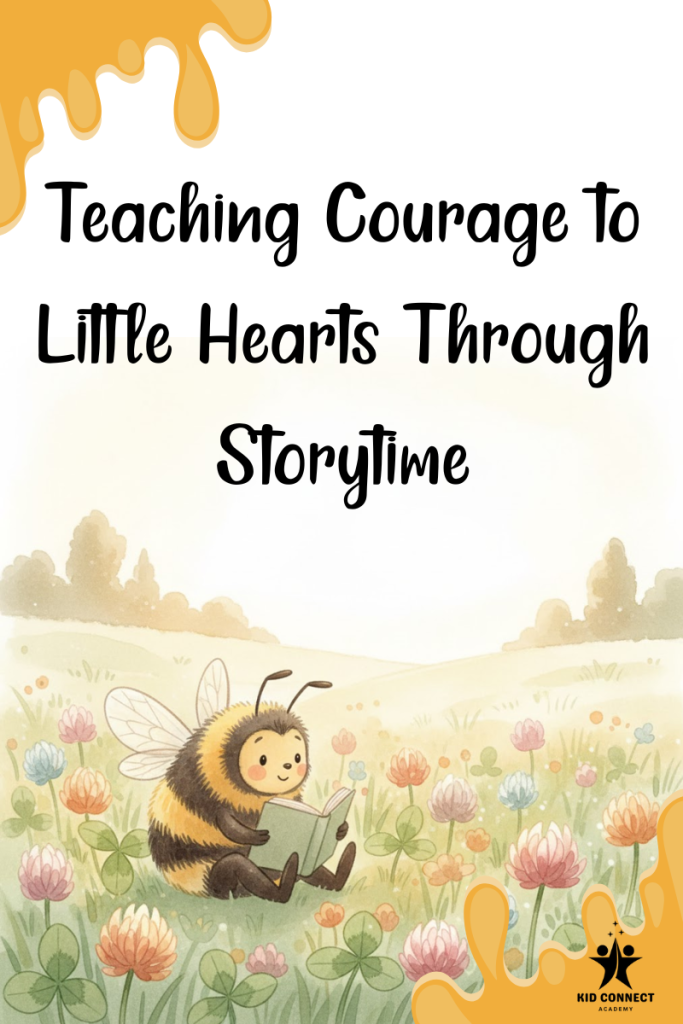
A story allows a child to say, “If Buzzby can try, maybe I can too.”
A Courage Moment from Clover Meadow
In Buzzby’s Big Step, Buzzby faces something unfamiliar. He does not rush forward confidently. He pauses. He wonders. He considers.
This moment matters.
Buzzby’s courage is not loud or dramatic. It is quiet and thoughtful. That kind of bravery feels attainable to young children. They see that courage does not mean fear disappears. It means moving forward gently, one step at a time.
How to Use Storytime to Build Courage
Storytime can become a powerful tool for social and emotional learning with just a few intentional pauses.
1. Pause and Notice Feelings
When a character hesitates or feels unsure, pause and name it.
You might say:
- “Buzzby looks a little nervous.”
- “I wonder what he’s thinking right now.”
This helps children connect emotions to experiences.
2. Ask Open-Ended Questions
Instead of quizzing for right answers, invite reflection.
Try questions like:
- “What would you do if you felt that way?”
- “What might help Buzzby feel brave?”
There is no pressure to respond perfectly. The conversation itself builds confidence.
3. Connect the Story to Real Life
After reading, gently link the story to your child’s world.
You might say:
- “Remember when you felt unsure about something new?”
- “What small step helped you then?”
These connections help children see courage as something they already practice.