
Helping Preschoolers Try New Things Without Pressure
January often brings fresh starts for families. New routines, new classes, new expectations. While adults may feel hopeful about change, preschoolers often feel unsure.
If your child hesitates at drop-off, refuses to try a new activity, or clings tightly when something unfamiliar comes up, you are not alone. For young children, trying something new can feel overwhelming, even when it seems small to us.
The good news is this: courage in early childhood does not grow through pressure. It grows through safety, patience, and gentle support.
Why New Things Feel Big to Little Hearts
Preschoolers are still learning how the world works. Their sense of security comes from predictability, trusted adults, and familiar rhythms. When something new enters their world, even a positive change, it can feel like a loss of control.
What looks like stubbornness is often fear.
What sounds like refusal is often uncertainty.
Understanding this helps us respond with compassion instead of frustration.
A Gentle Lesson from Clover Meadow
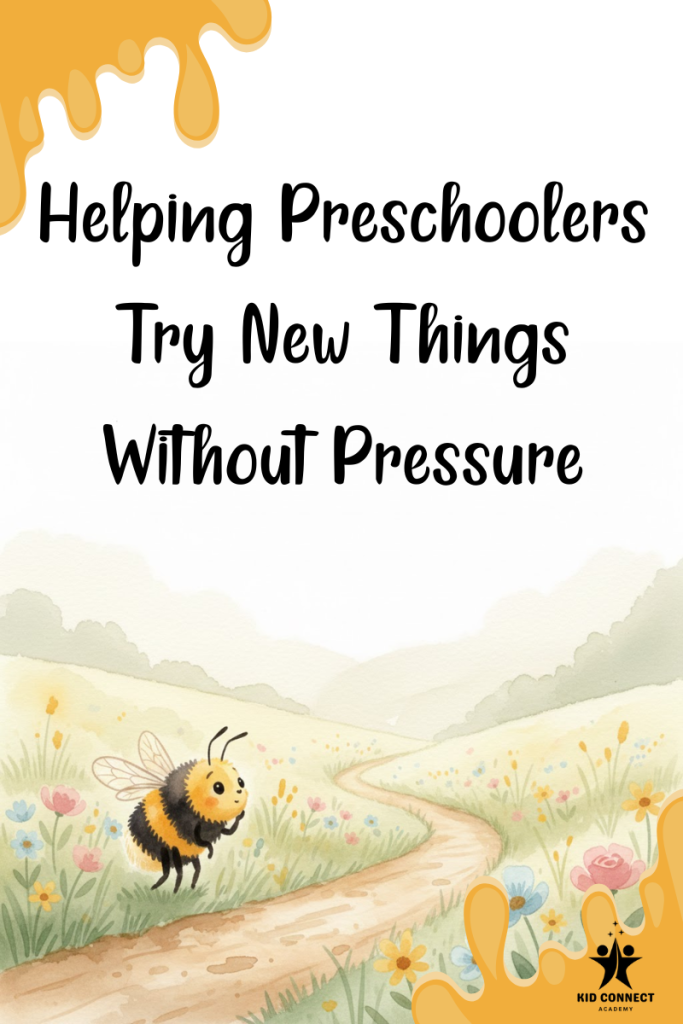
In Buzzby’s Big Step, Buzzby the bumblebee faces something that feels exciting and scary at the same time. Trying something new means stepping away from what feels safe. Buzzby does not become brave all at once. He takes one small step, then another, supported by curiosity and encouragement.
This mirrors how real courage develops in young children. It is not sudden confidence. It is slow, steady growth.
Three Ways to Help Your Preschooler Try New Things Without Pressure
1. Normalize the Fear
Instead of rushing your child past their feelings, name them.
Simple phrases like:
- “New things can feel a little scary.”
- “It’s okay to take your time.”
These words help children feel understood, which actually makes bravery more possible.
2. Break Big Changes into Small Steps
Trying something new does not have to be all or nothing.
If your child is nervous about an activity:
- Let them watch before joining.
- Try it together once.
- Practice at home first.
Small steps build confidence far more effectively than forced leaps.
3. Celebrate Effort, Not Outcomes
Courage is about trying, not succeeding.
Praise moments like:
- Standing nearby
- Asking a question
- Giving it a short try
When children learn that effort matters, they feel safe to keep growing.
Faith and Patience Go Hand in Hand
For families raising children with faith, it can be comforting to remember that growth is not rushed. God works patiently, gently shaping hearts over time. Our role as parents is not to hurry our children forward, but to walk beside them as they grow.
Courage Grows One Small Step at a Time
Helping preschoolers try new things is less about pushing and more about guiding. With calm support, familiar stories, and steady encouragement, children learn that new experiences can be safe, manageable, and even joyful.
Sometimes, all it takes is one small step.
Looking for a Gentle Way to Support Courage at Home?
Stories like Buzzby’s Big Step are designed to help children explore bravery in a safe, comforting way. Through storytime conversations and simple activities, little hearts can practice courage without pressure.