
Christmas is often described as magical, especially when young children are involved. Lights glow, music fills the air, and familiar traditions return each year. For preschoolers, however, the way Christmas is experienced matters just as much as the excitement itself. While big events and busy schedules can feel joyful to adults, young children thrive most when Christmas feels calm, predictable, and emotionally safe.
Gentle Christmas traditions are not about doing less out of obligation. They are about choosing rhythms that support how preschoolers learn, feel, and grow. When the season is approached with intention, Christmas becomes a source of comfort rather than overwhelm.
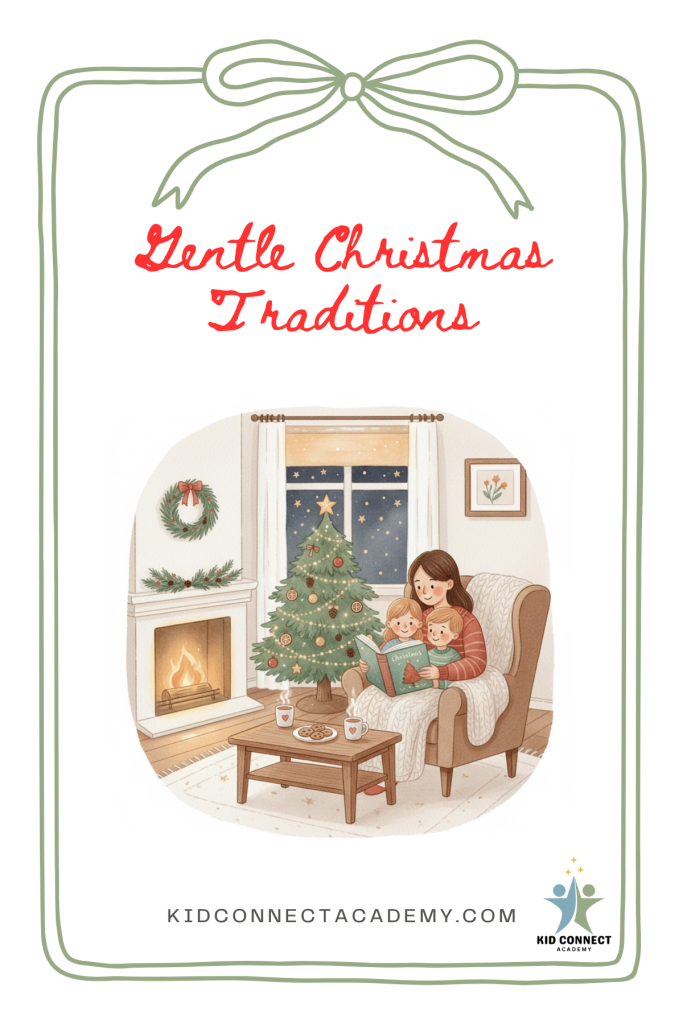
How Preschoolers Experience the Holiday Season
Preschoolers are still developing their ability to regulate emotions, process change, and understand time. They feel excitement deeply, but they also feel stress deeply. Changes in routine, crowded environments, and high expectations can be confusing even when those changes are positive.
A calendar filled with special events can quickly become too much. Late nights, different caregivers, and unpredictable days may lead to more meltdowns, clinginess, or fatigue. These responses are not signs of misbehavior. They are signals that a child’s nervous system is overloaded.
Gentle traditions offer a counterbalance. They create a sense of familiarity in the middle of seasonal change. When preschoolers know what to expect, they feel safer and more at ease.
The Power of Predictability
One of the greatest gifts we can give young children during Christmas is predictability. Simple traditions that happen the same way each year help children build emotional security.
This might look like:
- Reading the same Christmas story each night before bed
- Lighting a candle or turning on Christmas lights at the same time each evening
- Sharing a short prayer or moment of gratitude daily
- Sitting down for a quiet activity at a familiar time of day
These routines do not need to be elaborate. In fact, the simpler they are, the more meaningful they become. Repetition allows preschoolers to relax into the experience rather than constantly adjusting to something new.
Gentle Traditions Support Emotional Regulation
Preschoolers are learning how to manage big feelings. Christmas often brings heightened emotions, from excitement to disappointment to exhaustion. Gentle traditions help anchor children emotionally.
Quiet moments such as coloring, listening to a familiar story, or sitting close with a caregiver allow children to regulate their bodies and minds. These moments communicate safety. They tell children that they do not have to perform or keep up with the pace of the season.
When children feel emotionally regulated, they are better able to enjoy special moments, connect with others, and participate in activities without becoming overwhelmed.
Faith-Based Traditions That Feel Safe and Warm
For families who incorporate faith into Christmas, gentle traditions are especially important. Preschoolers understand faith best through concrete experiences and consistent modeling. Short prayers, simple songs, and familiar stories help children connect spiritual meaning with feelings of love and peace.
Faith-based traditions for preschoolers work best when they are:
- Brief and age-appropriate
- Repeated regularly
- Focused on love, kindness, and gratitude
Rather than long explanations or formal practices, gentle faith moments allow children to absorb meaning naturally. Over time, these moments shape how children understand both Christmas and faith itself.
Calm Holidays Create Lasting Memories
It is easy to assume that bigger celebrations create stronger memories. In reality, preschoolers remember how they felt more than what they did. They remember sitting close, feeling safe, and sharing simple joys.
Gentle traditions often become the memories that last. The quiet story before bed. The familiar song is sung together. The calm activity at the table while lights twinkle nearby. These moments build emotional warmth that children carry with them.
When Christmas feels calm, children associate the season with comfort and connection rather than stress.
Supporting Parents and Caregivers Too
Gentle Christmas traditions benefit adults as much as children. The pressure to create a “perfect” holiday can be exhausting. Simplifying traditions allows caregivers to be present rather than overwhelmed.
When expectations are reduced, there is more space for genuine connection. Parents and educators can respond more patiently, notice small joys, and model calm behavior. Children sense this calm and respond to it.
Choosing gentle traditions is not about lowering standards. It is about aligning the season with what young children truly need.
Building Traditions That Grow With Children
Gentle traditions are flexible. They can evolve as children grow while maintaining a familiar foundation. A simple bedtime story in the preschool years may later become a family read-aloud. A short prayer may grow into a deeper conversation.
What matters is not the scale of the tradition, but the consistency and heart behind it. When children experience Christmas as a season of steady love and calm presence, they develop a healthy relationship with both tradition and faith.
A Season of Peaceful Wonder
Preschoolers thrive when Christmas feels calm and predictable. Gentle traditions support emotional well-being, foster meaningful faith connections, and create memories rooted in safety and love.
In a world that often encourages more noise and more activity, choosing gentleness is a powerful act. It allows Christmas to be what it was always meant to be for young children. A season of warmth, wonder, and quiet joy.